
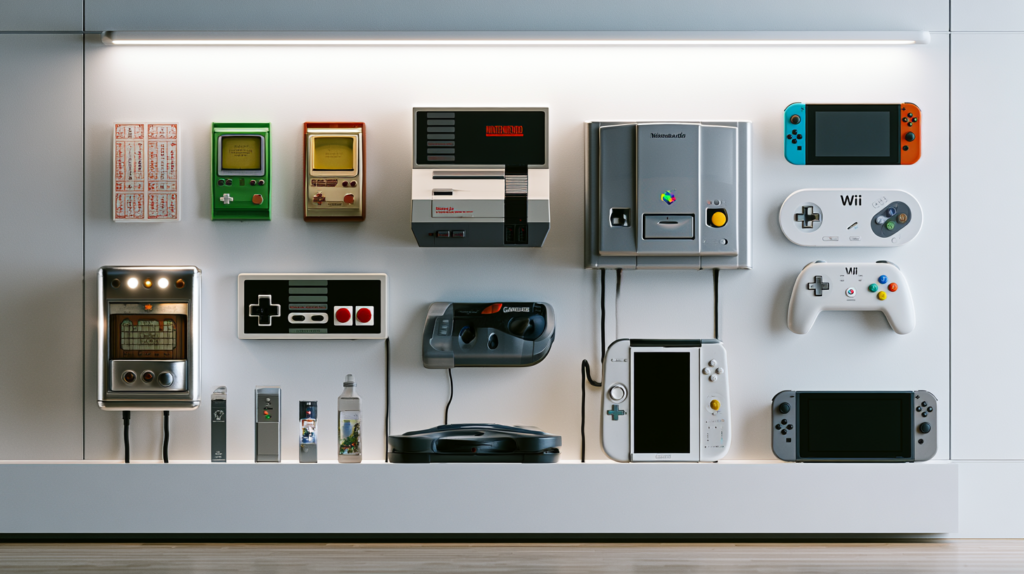
The Evolution of Nintendo: From Playing Cards to Gaming Giant
Nintendo is one of the most recognizable names in the entertainment industry, known for creating beloved franchises such as Super Mario, The Legend of Zelda, and Pokémon. However, many gamers are surprised to learn the evolution of Nintendo. It’s story began long before video games existed. From producing traditional Japanese playing cards in the 19th century to becoming one of the world’s most influential gaming companies, Nintendo’s journey is a fascinating tale of innovation, adaptation, and creativity.
Nintendo’s Humble Beginnings
Nintendo was founded in 1889 by Fusajiro Yamauchi in Kyoto, Japan. Originally known as Nintendo Koppai, the company specialized in manufacturing Hanafuda playing cards, a traditional Japanese card game. At a time when leisure activities were becoming increasingly popular in Japan, Nintendo’s handcrafted cards quickly gained a reputation for quality.
For decades, the company focused primarily on the card business. As demand grew, Nintendo expanded its operations and became one of Japan’s leading playing card manufacturers. Yet the company would eventually face a challenge common to many businesses: the need to evolve as consumer preferences changed.
Diversification and Experimentation
During the 1950s and 1960s, under the leadership of Hiroshi Yamauchi, Nintendo experimented with a variety of business ventures outside of playing cards. These included taxi services, instant rice products, and even love hotels. While most of these ventures failed to achieve long-term success, they demonstrated Nintendo’s willingness to take risks and explore new opportunities.
This period of experimentation ultimately led the evolution of Nintendo toward the entertainment industry. The company recognized that its future lay in creating fun experiences rather than simply manufacturing products.
Entering the Video Game Industry
Nintendo’s first significant step into gaming came during the 1970s. Initially, the company produced electronic toys, many of which were designed by Gunpei Yokoi, one of Nintendo’s most influential innovators. His creations helped establish Nintendo’s reputation for unique and engaging entertainment products.
As the video game industry began to grow, Nintendo developed arcade games and gaming hardware. One of its early breakthroughs came in 1981 with the release of Donkey Kong, an arcade game that introduced players to a character known as Jumpman, who would later become the iconic Mario.
The success of Donkey Kong proved that Nintendo had the creativity and talent to compete in the rapidly expanding gaming market.
The Nintendo Entertainment System Revolution
Nintendo’s true transformation into a gaming powerhouse occurred in 1985 with the launch of the Nintendo Entertainment System (NES) in North America. At a time when the video game industry was recovering from a major market crash, the NES helped restore consumer confidence through high-quality games and strict quality control.
The NES introduced gamers to legendary titles such as Super Mario Bros., Metroid, and The Legend of Zelda. These games established many of the design principles still used in modern gaming and laid the foundation for Nintendo’s future success.
The console’s popularity turned Nintendo into a global household name and cemented its position as a leader in interactive entertainment.
Innovation Through the Decades
The evolution of Nintendo continued with each new generation of hardware. The Game Boy, released in 1989, revolutionized portable gaming and became one of the best-selling handheld devices of all time. The addition of Pokémon in the 1990s further strengthened Nintendo’s dominance in the handheld market.
The company also found success with home consoles such as the Super Nintendo Entertainment System (SNES), Nintendo 64, and GameCube. While competitors often focused on technical specifications, Nintendo frequently emphasized gameplay innovation and family-friendly experiences.
This philosophy reached new heights with the Nintendo Wii in 2006. Featuring motion controls, the Wii attracted casual players and families, expanding gaming’s appeal beyond traditional audiences. The console became a worldwide phenomenon and demonstrated Nintendo’s ability to redefine how people interact with games.
The Rise of the Nintendo Switch
In 2017, Nintendo launched the Nintendo Switch, a hybrid console that could be used both as a handheld device and connected to a television. The innovative design appealed to a broad audience and quickly became one of Nintendo’s most successful platforms.
Blockbuster titles such as The Legend of Zelda: Breath of the Wild, Animal Crossing: New Horizons, and Mario Kart 8 Deluxe helped drive record-breaking sales. The Switch showcased Nintendo’s talent for combining accessibility, creativity, and technological innovation in a single platform.
Nintendo’s Lasting Legacy
Today, Nintendo is far more than a video game company. The evolution of Nintendo led to a global entertainment brand with a portfolio of legendary characters, multimedia projects, theme park attractions, and digital services. Despite dramatic changes in technology and consumer habits over more than a century, Nintendo has remained true to its core mission: creating products that bring joy to people of all ages.
From humble beginnings as a playing card manufacturer in Kyoto to becoming a worldwide gaming giant, Nintendo’s evolution is a remarkable example of adaptability and vision. As the gaming industry continues to evolve, Nintendo’s history suggests that the company will remain at the forefront of entertainment innovation for many years to come.