Can You Use a TV Instead of a Gaming Monitor for PC Gaming?
If you’re building a gaming setup or looking to upgrade your display, you may wonder whether you can use a TV instead of a gaming monitor for PC gaming. With modern TVs offering features like 4K resolution, high refresh rates and HDMI 2.1 connectivity, the gap between TVs and gaming monitors has become much smaller than it once was.
The short answer is yes, you can absolutely use a TV for PC gaming. In some situations, a TV may even be the better choice. However, there are important differences to consider before deciding which display suits your gaming needs.
TV vs Gaming Monitor: What’s the Difference?
Gaming monitors and televisions are designed with different priorities in mind.
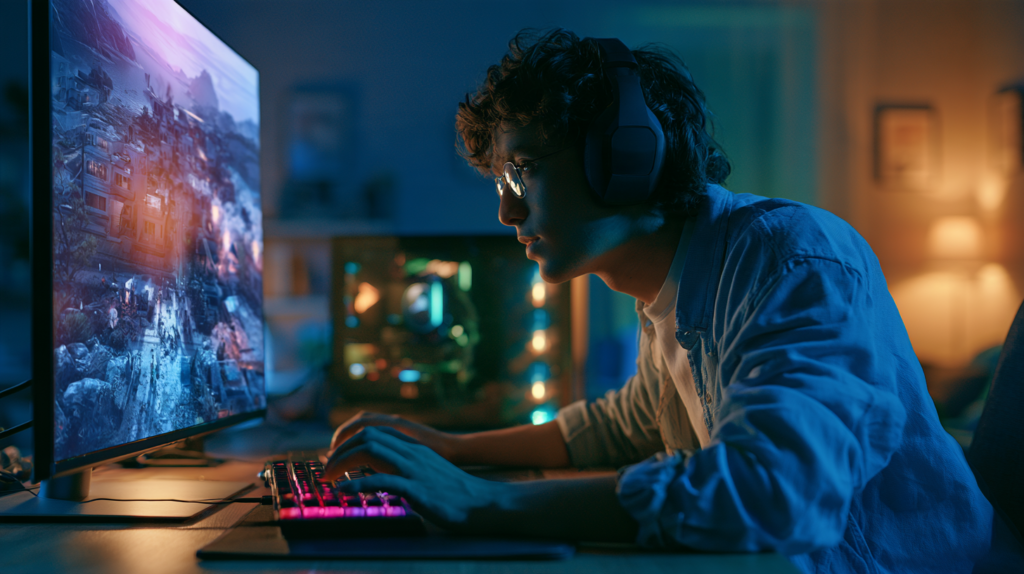
Gaming monitors are built specifically for close-up viewing and fast response times. They often feature high refresh rates, low input lag and gaming-focused technologies that help provide a smooth and responsive experience.
Televisions are designed primarily for entertainment, including movies, TV shows and console gaming. They typically offer larger screen sizes and stronger multimedia features, making them attractive for gamers who want a more immersive experience.
Today’s premium TVs and gaming monitors share many technologies, including Variable Refresh Rate (VRR), High Dynamic Range (HDR) and high refresh rates, making the choice less straightforward than it used to be.
Advantages of Using a TV for PC Gaming
Larger Screen Sizes
One of the biggest attractions of gaming on a TV is the screen size. While most gaming monitors range between 24 and 34 inches, modern TVs commonly start at 43 inches and can easily exceed 65 inches.
For single-player games such as Cyberpunk 2077, Red Dead Redemption 2 or Microsoft Flight Simulator, a large screen can significantly increase immersion. Detailed environments and cinematic visuals often look more impressive on a larger display.
Excellent 4K Gaming Experience
Many modern TVs are designed with 4K content in mind. Brands such as LG, Samsung, Sony and TCL offer televisions with excellent image quality, deep contrast and vibrant colours.
If your gaming PC is equipped with a powerful graphics card such as an NVIDIA GeForce RTX 5070 or AMD Radeon RX 9070 XT, a 4K TV allows you to enjoy detailed visuals across a much larger screen.
Value for Money
In some cases, a mid-range 55-inch TV may cost less than a premium gaming monitor. This can make a TV an attractive option for gamers who want a larger display without spending thousands on an ultra-wide or high-end gaming monitor.
Multi-Purpose Entertainment
A TV can serve multiple roles in your home. Beyond gaming, it can also be used for streaming Netflix, Disney+, Prime Video and YouTube. If space is limited, one display can handle gaming and entertainment duties.
Potential Drawbacks of Using a TV
Higher Input Lag
Input lag refers to the delay between pressing a button and seeing the action happen on screen.
While gaming-focused TVs have improved dramatically, some budget models still have noticeably higher input lag than dedicated gaming monitors. Competitive gamers playing titles such as Counter-Strike 2, Valorant or Call of Duty may notice the difference.
Most modern gaming monitors offer exceptionally low input lag that provides a more responsive experience during fast-paced gameplay.
Slower Response Times
Response time measures how quickly pixels can change colour. Lower response times help reduce ghosting and motion blur.
Many gaming monitors achieve response times of 1ms or less, whereas some TVs can struggle with fast-moving scenes. However, premium OLED TVs have narrowed this gap considerably.
Desk Space Requirements
A large television may not be ideal for a traditional desk setup. Sitting too close to a 55-inch or 65-inch screen can be uncomfortable and may require frequent head movement.
Most PC gamers using TVs position themselves further back, making the setup feel closer to a console gaming experience.
Features to Look for in a Gaming TV
If you’re considering using a TV for PC gaming, look for the following features:
- HDMI 2.1 connectivity
- 120Hz or higher refresh rate
- Variable Refresh Rate (VRR)
- Auto Low Latency Mode (ALLM)
- HDR support
- Low input lag in Game Mode
- 4K resolution
Popular gaming TVs include the LG OLED C-series, Samsung OLED S-series and Sony Bravia gaming-focused models.
When a TV Is Better Than a Gaming Monitor
A TV is often the better choice if:
- You mainly play single-player or story-driven games.
- You want a large, cinematic experience.
- You play from a sofa or further away from the screen.
- You use the display for films and streaming as well as gaming.
For immersive RPGs, racing games and open-world adventures, a quality 4K gaming TV can deliver an outstanding experience.
When a Gaming Monitor Is the Better Option
A gaming monitor is usually the better choice if:
- You play competitive esports titles.
- Your desk space is limited.
- You want the lowest possible input lag.
- You require refresh rates above 144Hz.
- You sit close to the screen.
Competitive gamers often prioritise responsiveness over screen size, making a high-refresh-rate monitor the ideal choice.
Final Verdict
So, can you use a TV instead of a gaming monitor for PC gaming? Absolutely. Modern gaming TVs offer excellent image quality, massive screen sizes and features that rival many gaming monitors. For casual and immersive gaming, a TV can be a fantastic choice.
However, competitive gamers who value ultra-fast response times and minimal input lag will usually be better served by a dedicated gaming monitor. The right choice ultimately depends on your gaming habits, available space and budget.