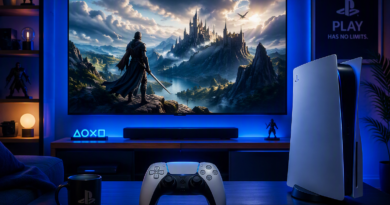

How PlayStation Is Expanding Beyond Consoles into New Entertainment Spaces
For decades, PlayStation has been synonymous with gaming consoles. Since the launch of the original PlayStation in 1994, Sony has built one of the most successful gaming brands in the world. However, in recent years, PlayStation has been evolving far beyond traditional console gaming. Through movies, television, PC gaming, virtual reality, live services, and digital entertainment experiences, PlayStation is transforming into a broader entertainment ecosystem.
As the gaming industry continues to grow and converge with other forms of media, Sony’s strategy is clear: leverage its iconic gaming franchises and technology to reach audiences wherever they consume entertainment.
The Rise of PlayStation Productions
One of the most significant ways PlayStation is expanding beyond consoles is through film and television adaptations. Sony established PlayStation Productions to bring some of its most popular gaming franchises to the big and small screens.
The success of HBO’s The Last of Us and Amazon’s Fallout demonstrated that video game adaptations can become mainstream cultural events. The series attracted both longtime fans and completely new audiences, helping to elevate the PlayStation brand beyond gaming communities. Similarly, the Uncharted movie introduced Nathan Drake and his adventures to cinema audiences worldwide.
Sony has continued to invest heavily in adaptation projects based on well-known PlayStation properties. With more series and films in development, PlayStation is increasingly positioning its intellectual property as entertainment brands that can thrive across multiple formats rather than remaining confined to gaming consoles.
Expanding Gaming to PC Players
Historically, PlayStation exclusives were only available on Sony hardware. That strategy has shifted dramatically over the past few years.
Titles such as God of War, Marvel’s Spider-Man, Horizon Zero Dawn, and The Last of Us Part I have all launched on PC, allowing millions of additional players to experience PlayStation’s premium games. This move significantly expands Sony’s audience without requiring consumers to purchase a PlayStation console.
By embracing the PC market, Sony is creating new revenue streams while increasing awareness of its franchises. Many players who discover these games on PC may later become PlayStation console customers, while others engage with the brand entirely through digital platforms.
This broader approach reflects Sony’s understanding that entertainment brands must be accessible across multiple devices to remain competitive in today’s connected world.
Virtual Reality and Immersive Experiences
PlayStation is also investing in next-generation entertainment through virtual reality. The launch of PlayStation VR2 reinforced Sony’s belief that immersive technology will play an important role in the future of gaming.
Unlike traditional gaming experiences, virtual reality places players directly inside digital worlds. Games such as Horizon Call of the Mountain showcase how PlayStation franchises can be reimagined through immersive technology, offering experiences that simply are not possible on a television screen alone.
As VR hardware improves and becomes more accessible, PlayStation’s investment in immersive entertainment could help establish Sony as a leader in emerging digital experiences that blend gaming, storytelling, and interactive media.
Building a Stronger Digital Ecosystem
PlayStation is increasingly focused on services and digital experiences that keep players engaged beyond individual game purchases.
PlayStation Plus has evolved from a simple online multiplayer subscription into a comprehensive service offering game libraries, cloud streaming options, exclusive content, and digital benefits. These services encourage long-term engagement and create recurring revenue opportunities for Sony.
The company is also exploring live-service gaming, where players can continuously engage with evolving online worlds and communities. This approach aligns PlayStation with broader entertainment trends that emphasize ongoing engagement rather than one-time consumption.
Strengthening Cross-Media Franchises
Today’s entertainment landscape rewards brands that can exist across multiple channels. Sony is uniquely positioned because it owns major gaming studios, film production capabilities, music businesses, and distribution networks.
This allows PlayStation franchises to be expanded into movies, TV shows, merchandise, digital events, and potentially even theme park-style experiences in the future. Characters such as Kratos, Ellie, Joel, Aloy, and Nathan Drake are becoming recognizable entertainment icons that extend well beyond gaming audiences.
The more Sony successfully builds cross-media franchises, the more valuable its intellectual property becomes. This strategy mirrors approaches used by major entertainment companies that maximize the reach of their most popular characters and stories.
The Future of PlayStation Entertainment
PlayStation’s future is no longer defined solely by console sales. While the PlayStation 5 remains central to Sony’s gaming strategy, the company is actively building an entertainment ecosystem that spans film, television, PC gaming, virtual reality, subscription services, and digital communities.
By expanding into new entertainment spaces, Sony is ensuring that PlayStation remains relevant in a rapidly changing media landscape. Whether consumers are watching a television adaptation, playing on a PC, exploring virtual reality worlds, or engaging with a subscription service, they are increasingly interacting with the PlayStation brand in ways that go far beyond a traditional console.
As entertainment continues to evolve, PlayStation’s ability to connect gaming with broader media experiences could become one of its greatest competitive advantages, helping the iconic brand reach new audiences and define the future of interactive entertainment.