
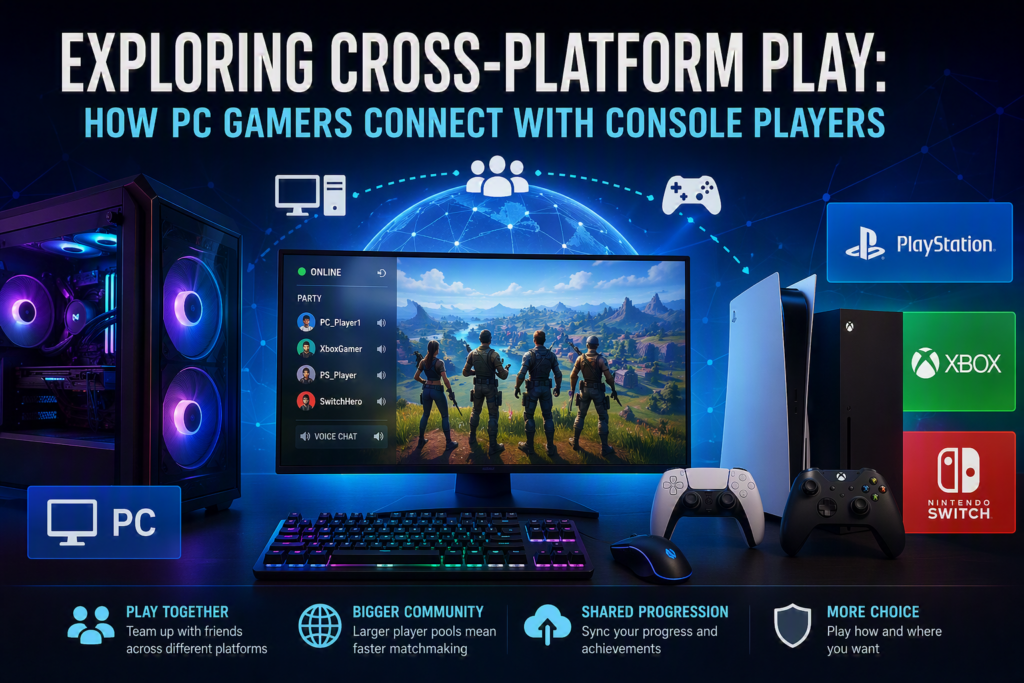
Exploring Cross-Platform Play: How PC Gamers Connect with Console Players
Cross-platform play has transformed modern gaming, breaking down barriers that once separated players based on their preferred hardware. In the past, PC gamers could only compete or cooperate with other PC users, while console players were restricted to their respective ecosystems. Today, many of the world’s most popular games allow players on PC, Xbox, PlayStation, and even Nintendo Switch to join the same matches, friends lists, and communities. As gaming continues to evolve, cross-platform play has become one of the most significant innovations in the industry.
What Is Cross-Platform Play?
Cross-platform play, often called “cross-play,” refers to the ability for gamers using different devices to play together online. Whether someone is using a high-performance gaming PC, a PlayStation 5, an Xbox Series X, or a Nintendo Switch, cross-play enables them to share the same multiplayer experience.
Popular titles such as Fortnite, Call of Duty: Warzone, Rocket League, Minecraft, and Apex Legends have embraced cross-platform functionality. These games allow friends to team up regardless of the platform they own, making multiplayer gaming more accessible and inclusive than ever before.
Why Cross-Platform Gaming Matters
The biggest advantage of cross-platform play is connectivity. Many gamers have friends who own different systems, and cross-play eliminates the need to purchase additional hardware just to play together.
Larger player pools are another major benefit. By combining players from multiple platforms, developers can reduce matchmaking times and create more balanced online matches. This is especially valuable for competitive games where finding opponents quickly is essential.
Cross-platform features also help extend the lifespan of games. When players from different platforms are united, communities remain active for longer periods, keeping multiplayer titles healthy and enjoyable years after launch.
How PC Gamers Connect with Console Players
Modern cross-platform gaming relies on unified online accounts and cloud-based services. Instead of being restricted to platform-specific networks, players often create publisher accounts that work across multiple devices.
For example, an Epic Games account allows Fortnite players on PC, Xbox, PlayStation, and Switch to maintain a shared friends list and progression system. Similar systems are used by Activision, EA, Ubisoft, and Microsoft.
The process is typically straightforward:
- Create or link a gaming account.
- Add friends using usernames or account IDs.
- Enable cross-platform play in game settings.
- Join parties and multiplayer sessions regardless of platform.
This seamless integration has become a standard feature in many leading online games.
The Benefits for PC Gamers
PC gamers often enjoy advantages such as higher frame rates, customizable graphics settings, and a broader range of input devices. Cross-platform play allows them to enjoy these benefits while still connecting with friends on consoles.
Another advantage is increased game population. Older multiplayer games that may struggle to find enough PC players can remain active when console communities are included.
Cross-platform progression is also becoming increasingly common. Players can start a game on their PC, continue on a console, and retain their achievements, unlocks, and purchased content through cloud synchronization.
Challenges of Cross-Platform Play
Despite its benefits, cross-platform gaming presents several challenges. One of the most discussed issues is competitive balance. Mouse and keyboard users often have greater aiming precision compared to players using traditional controllers.
To address this concern, many developers implement input-based matchmaking or offer optional cross-play settings. Some games separate keyboard-and-mouse users from controller players, while others provide aim-assist features to help maintain fairness.
Technical differences between platforms can also create challenges. Developers must ensure that updates, content releases, and performance standards remain synchronized across multiple ecosystems.
Additionally, platform-specific policies and certification requirements can make implementing and maintaining cross-play more complex than standard multiplayer systems.
The Future of Cross-Platform Gaming
Cross-platform play is no longer a niche feature—it is rapidly becoming an expectation among gamers. As cloud gaming services continue to grow and online ecosystems become more interconnected, platform boundaries are likely to become even less important.
Major gaming companies increasingly recognize that players value flexibility and accessibility. Future games are expected to launch with cross-play support from day one, while advancements in cloud technology may further blur the distinction between PCs, consoles, and mobile devices.
Conclusion
Cross-platform play has revolutionized multiplayer gaming by bringing together players from different platforms into a single community. For PC gamers, it offers greater connectivity, larger player bases, and the ability to enjoy games with friends regardless of their hardware choices. While challenges such as matchmaking balance remain, the continued growth of cross-platform technology is helping create a more connected and inclusive gaming landscape. As the industry moves forward, cross-play will undoubtedly remain a key feature shaping the future of online gaming.


Pingback: Top Co-Op Games to Play with Friends in 2026 | Outer Room